The system your business runs on, owned by someone who doesn’t leave

I build, fix and take over the software that operations depend on: the applications, the integrations behind them, and the systems nobody can afford to switch off.

Twenty-two years of it, twenty of them going into businesses as the outside technical owner. Insurance, telecoms, health, logistics, cycling.

HL7 and FHIR interfaces. Interoperability layers. Offline engines on devices that never see a signal. All of it built before AI wrote code, which is how I know the difference between code that works and code that merely compiles.

Currently taking on one new project. Tell me what’s breaking →

“Clive has the rare ability to translate a complex conceptual solution into a well constructed workable system that is intuitive to use.”
Natalie Baatjies, worked with Clive at DVT on a project for Vodacom, 2010

Where I learned this craft

A college project on a Palm Pilot became a full-time job building the survey engine that carried 90,000 research interviews across 7 studies in resource-poor settings. Large data, small device, no connection. The Trip Planner below is the same problem with better tools.

I spent nine years at DVT, mostly on client sites: Woolworths, Vodacom, Old Mutual, Alpha Asset Management, Glacier. Insurance, retail, telecoms and asset management. The same job every time. Go in, learn a business I’d never seen, take ownership of software they couldn’t afford to break.

Then Jembi, working with the National Department of Health and the Western Cape Department of Health on health information exchange: HL7 mediators plugging into an OpenHIE interoperability layer, a FHIR interface to central health data, and a clinical decision support app that gave health workers their patient’s full history in one readable view.

Independent since 2017, based in Cape Town. Same job, different hat.

Systems I’ve built and still run

Tracks4Africa Trip Planner.

A trip planner that works where there’s no signal

Half a million points of interest and a continent’s road network, usable in a web app and driven in a mobile app with no connection at all.

Tracks4Africa supplies the road data as 1.98 GB of files. I wrote an importer in Rust that turns it into a single 683 MB container the phone downloads once, plus the routing engine that reads it. The engine memory maps that file and reads on demand, because a phone can’t hold 683 MB in memory. Turn-by-turn instructions come from the device, not a server.

Since launching in November 2023

  • 22,500users
  • 53,400trips planned
  • 118,000routes generated

Different industry, same problem: a method that couldn’t scale past one person.

ErgoFiT, with Science to Sport.

Nine years in production, and still in my hands

Dr Jeroen Swart’s fitting method was a working algorithm that lived in a spreadsheet: one person, one file, one cyclist at a time.

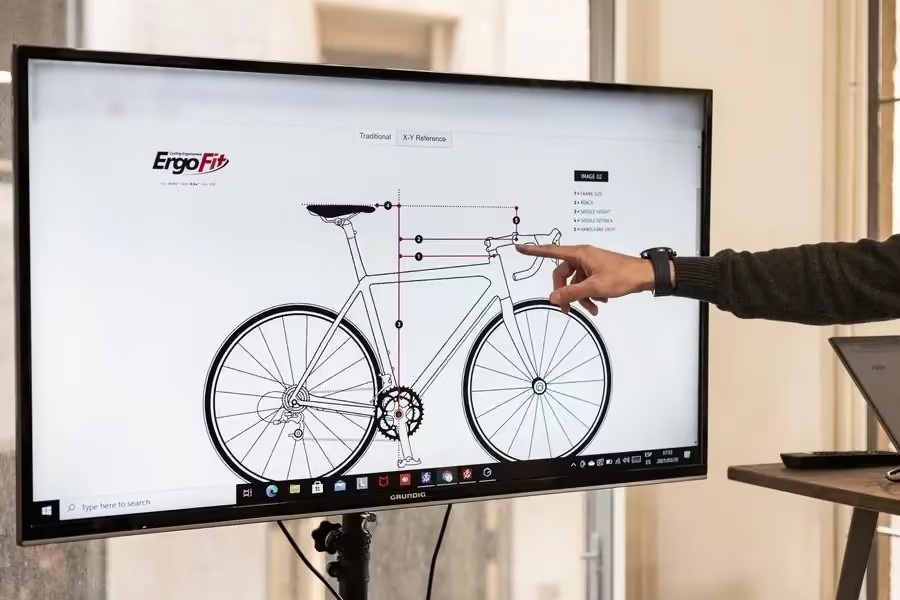
I led the build that turned it into a multi-tenant SaaS platform, live since 2017. Fitting businesses run their own clients inside it; fitters get a calculated position before the session starts, then work from it on the bike. Sold today as The ErgoFiT System in four priced tiers from Cape Town to Girona. The method has eight peer-reviewed publications behind it.

The ErgoFiT fitting interface on a large screen: a bike diagram with numbered fit measurements, and a fitter pointing at the handlebar position
  • 42fitting businesses
  • 16,846cyclists
  • 9years in production

Where I’m trusted with more than code

  • Fishgate, an agency where I’m responsible for a portfolio of web applications and help guide the business as CTO.
  • AGX, who brought me in to guide their use of AI, and where I’m building their internal web application on Supabase.
  • Science to Sport, where the ErgoFiT platform has been in my hands since 2017.

When to bring me in

  • The team spends too much time moving information between spreadsheets and systems.
  • Existing software is becoming difficult to maintain or change.
  • Systems don’t share the information people need.
  • A new business application or customer portal needs developing.
  • Someone needs to take technical ownership of an existing platform.

How I work

  1. Listen. I speak your language. Requirements get understood properly before anything gets built.

  2. Investigate. An honest look at the current plans and systems, including what isn’t working.

  3. Propose. A solution that fits your problem rather than a template.

  4. Plan. Broken into small, manageable pieces with milestones you can see.

  5. Build. In the stages we agreed, with each milestone shown to you as it lands.

Where AI fits

Every project on this page was built before AI assisted development, including the routing engine. The hard engineering came first: a container format designed around a phone’s memory, a survey engine inside Palm OS constraints, a multi-tenant platform that’s been running since 2017.

I use AI now, where it earns its place, mostly for the parts of a job that were always tedious rather than the parts that were always hard. Having built the hard parts without it is what lets me judge its output instead of trusting it.

Talk to me

If something above sounds like your situation, tell me what isn’t working. You don’t need a brief, a spec or a budget figure to start a conversation. Most people arrive with a problem they can describe in a paragraph and no clear idea of what fixing it involves.

Get in touch →

Or email if you’d rather write it out first.

What the first call actually is

Write to me first and we’ll set up a call. Thirty minutes, no pitch, no slide deck. I ask what the system does today, who depends on it, and what happens when it stops. You leave with an honest read on whether this is a small job, a large one, or something you don’t need me for.

If it’s not a fit, I’ll say so on the call and point you at what I’d do in your position.

What happens after, if we go ahead

A short written scope: what we’re solving, what I’ll build, what it costs and in what stages. You approve it before anything starts, and the plan gets broken into milestones you can see progress against.

I take on a limited number of projects at a time so each one gets real attention. That’s why this page says one new project, and means it.

Working with me from outside South Africa

I work remotely with clients across time zones. HL7, FHIR and OpenHIE work was done with national health departments; the ErgoFiT platform serves fitting businesses in Cape Town and Girona. If your team is elsewhere, that isn’t a complication.